Every link you build is a vote. Most votes are quiet.
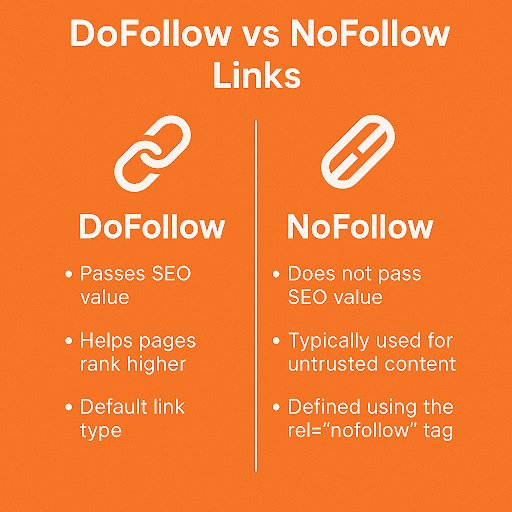
A dofollow links is the only kind that speaks out loud. Everything else — nofollow, sponsored, UGC — is a whisper Google hears but refuses to count the same way. Understanding that difference is the entire game.
This guide breaks down what a dofollow link actually is at the code level, why it still carries the most weight in 2026, how to earn them safely, and the exact points where they stop helping and start hurting.
What a Dofollow Link Actually Is at the Code Level
Strip away the SEO jargon and it’s simple: a dofollow link is a standard hyperlink with no restriction attached.
htmlPreviewOpenCopyDownload
<a href="https://example.com/page/">This is a dofollow link</a>
That’s it. No rel attribute. The default state of every link on the web — pass authority, pass relevance, pass trust.
The moment you add a rel attribute, you’re telling Google what to do with it:
htmlPreviewOpenCopyDownload
<a href="https://example.com/" rel="nofollow">Nofollow</a>
<a href="https://example.com/" rel="sponsored">Sponsored</a>
<a href="https://example.com/" rel="ugc">UGC</a>
rel="nofollow"— historically a hard stop on PageRank flow. Now a hint.rel="sponsored"— paid placements, affiliate links, anything transactional.rel="ugc"— user-generated content: forums, comments, profile pages.
Here’s the part most people miss: dofollow isn’t a tag you add. It’s the absence of one. You don’t “make” a dofollow link. You just leave it alone.
How Crawlers Actually Move Equity
Googlebot discovers URLs through sitemaps, internal links, external links, and historical crawl queues. Once it renders a page, it parses the DOM and builds a link graph.
PageRank flows along edges in that graph. A dofollow edge transfers equity. A nofollow edge doesn’t — or at least, doesn’t transfer it the same way.
Two variables control how much flows through:
- The authority of the source page — not the domain. The specific page hosting your link.
- The number of outbound links on that page — 5 outbound links split equity 5 ways. 200 outbound links split it into dust.
A link from a niche blog with 12 outbound links can outperform a link from a news site with 90. Volume of links on a page is the quiet killer of link value.
Why Dofollow Links Still Drive Rankings
Google has spent a decade adding context, machine learning, and entity understanding to its ranking systems. None of that replaced link equity. It refined it.
Three things dofollow links still do better than anything else:
Topical Authority Gets Built on Them
Every dofollow link is an assertion: this page is a credible source on this subject. When those assertions come from pages already trusted in your topic, Google starts grouping your site into that topical cluster.
The result isn’t a single ranking bump. It’s the ability to rank for a keyword you never explicitly targeted, because the surrounding cluster already proved relevance.
New URLs Get Indexed Faster
Fresh content has no history. No clicks. No engagement signals. No internal weight built up over years.
A dofollow link from an already-crawled, frequently-visited page gives Googlebot a reason to visit your new URL now instead of in three weeks. Sites with steady dofollow acquisition see new posts indexed in days. Sites without it wait weeks or never get indexed at all.
Referral Traffic and Brand Discovery
This is the underrated one. A link that sends 200 real visitors a month does something no metric column captures: it puts your brand in front of people who might search for it later.
Branded search volume is a ranking signal in itself. Dofollow links from real, traffic-generating pages are one of the few reliable ways to build it.
Dofollow vs. Nofollow: The Modern Reality
The old binary is gone.
In 2019, Google announced that nofollow would be treated as a hint rather than a directive. That means Google may choose to count a nofollow link when the context suggests it’s editorial and natural.
Then in 2019 they also introduced sponsored and ugc to give publishers more accurate labeling. Those attributes are treated more strictly.
Practical takeaway: nofollow links aren’t worthless. They still drive traffic, still aid discovery, still contribute to brand signals. But they do not carry the same equity transfer that dofollow links do — and pretending otherwise is how people build strategies that underperform.
Why 100% Dofollow Looks Manipulative
Here’s a pattern that shows up in nearly every manual action case study: a link profile that’s 96–100% dofollow.
Real editorial sites accumulate links naturally. Some come from resource pages (dofollow). Some from forums and comments (nofollow). Some from sponsored content (sponsored). Some from social platforms (nofollow, mostly).
A profile with zero nofollow links is a profile built by someone who never let a natural link happen. Google’s spam systems model this. The ratio itself is a footprint.
Rough benchmark for a healthy editorial profile:
- Branded anchors: dominant share
- Naked URLs and generic phrases (“here”, “this article”): large secondary share
- Exact-match keyword anchors: a modest slice — never the majority
- Nofollow/Sponsored/UGC mix: 20–40% of total links is a reasonable natural floor
Chase a natural shape, not a perfect one.
Safe Ways to Earn Editorial Dofollow Links
Forget the “get links fast” playbook. It’s dead, and it takes domains with it. These five work because they give publishers a reason to link that has nothing to do with you asking.
Original Data, Studies and Statistics Pages
Journalists and bloggers need numbers. If you publish a small original study — even a survey of 200 people in your niche — you become the citable source.
What works:
- A single clear statistic nobody else has published
- A clean methodology page so writers can cite it credibly
- A designed chart that’s easy to screenshot and embed (with attribution)
- Updated annually so the same URL keeps earning links
One good data page can pull 40–100 referring domains over two years. Nothing else in SEO matches that return on effort.
Digital PR and Niche Journalist Outreach
Not mass pitching. Targeted, one-at-a-time outreach to writers who already cover your topic.
The approach that works:
- Build a list of 30 journalists or bloggers who’ve written about your niche in the last 6 months
- Find the specific angle each one covers
- Pitch a data point or expert quote that fits their beat — not your product
- Keep the pitch under 120 words. No attachments. No “I hope this finds you well.”
Most replies will be silence. The ones that land are usually high-authority, contextual, and permanent.
Guest Contributions on Editorial-First Platforms
Guest posting isn’t dead. Guest posting on link farms is.
The filter: does the site reject submissions? Does it have a real editorial calendar? Do its existing contributors have actual bylines and credentials?
If yes, pitch something the audience actually needs. If the piece is good and includes one contextual mention of your brand, the link comes naturally. If you’re writing to place a link, editors can smell it in the first paragraph.
Unlinked Brand Mentions
Someone wrote about you and didn’t link. That’s not an insult — it’s an opportunity.
Find these mentions with a Google search for "your brand" -site:yourdomain.com or an alerts tool. Then send a short, polite email: “Thanks for the mention — if you’d like to link the brand name to the relevant page, here’s the URL.”
Conversion rate on this is genuinely high. You’re not asking someone to do you a favor from scratch. You’re asking them to complete something they already did.
Broken Link Replacement
Find pages on authority sites that link to resources that no longer exist. Pitch your own resource as the replacement.
The pitch is easy because it’s not about you — it’s about fixing a broken user experience on their page. Do it for pages linking to 404s in your topic area. If you’re analyzing competitor backlinks or broken link opportunities at scale, platforms like linksbuilderhub.com can help speed up discovery. Expect a 5–10% response rate, which is strong for cold outreach.
When Dofollow Links Start Hurting You
A link can be dofollow and still damage you. Three patterns cause most of the damage:
Exact-Match Anchor Over-Optimization
If 60% of your inbound anchors read “best backlink checker tool,” you didn’t build a link profile. You built a flag.
Google’s systems model anchor distribution at scale. An abnormal cluster of exact-match anchors — especially appearing suddenly, over a short window — reads as engineered. The threshold isn’t published, but most penalty case studies show exact-match anchors crossing roughly 15–25% of total links before problems start.
Watch the velocity. 40 exact-match anchors over 8 months looks editorial. The same 40 in 2 weeks looks like a campaign. Tools rarely flag this. You have to look at the timeline yourself.
PBNs and Paid Link Brokers
Private blog networks and link brokers sell you a metric, not a link. The DR 60 domain you buy on a marketplace is often a domain that was dropped, rebuilt with spun content, and propped up by 40 other sites in the same network.
Google has gotten very good at detecting these. Shared hosting footprints. Identical outbound patterns. Content that mentions unrelated industries. Zero organic traffic.
The cost isn’t the $300 you spent. It’s the manual action three years later that takes six months to recover from — if you recover at all.
Toxic Link Audits as Prevention
You can’t control who links to you. You can control what you know about it.
Run a monthly audit:
- Filter backlinks by referring domain traffic — links from domains with under 100 monthly visits deserve scrutiny
- Check anchor distribution for sudden shifts
- Watch for clusters of new domains in a short window from unrelated registrars or languages
- Flag pharma, gambling, adult anchors you never targeted
Disavow carefully. Google’s own guidance says it mostly ignores obvious spam on its own. Blanket disavowals do more harm than good. Flag clear, concentrated patterns and leave the noise alone.
The Bottom Line
Dofollow links aren’t complicated. They’re the default link — no tag, no restriction, no negotiation with the algorithm.
What’s complicated is earning them honestly, distributing them naturally, and knowing when a profile looks less like editorial coverage and more like an operation.
Build things people want to cite. Ship data. Fix broken pages on other people’s sites. Send short emails to real people. Repeat for eighteen months.
The compounding is slow and unglamorous. It’s also the only thing that survives an algorithm update.