Most SEO problems don’t announce themselves.
One day the page is ranking. Three weeks later it’s four positions down and nobody can explain why. Then someone opens a backlink checker tool and finds 1,200 new links pointing at the site, 400 of them from a single domain registered last month.
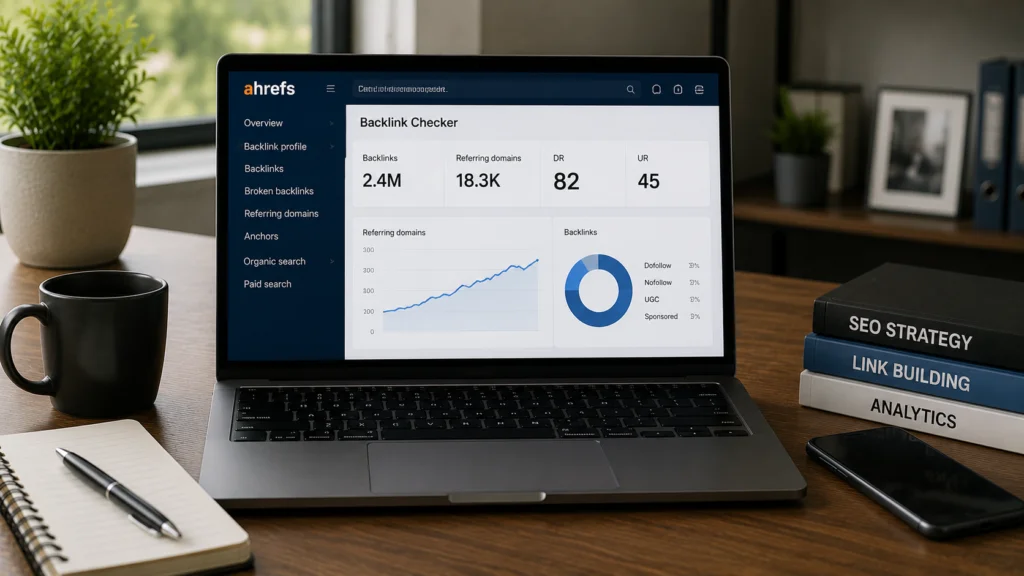
That’s where the work starts now. A backlink checker tool stopped being a vanity dashboard somewhere around 2023. It’s risk detection, opportunity mapping, and equity recovery in one screen.
Below is what to demand from a backlink checker tool, which metrics actually carry signal, and how to run a full audit before your coffee goes cold.
The Reality of Using a Backlink Checker Tool in 2026
Link Quantity Stopped Being a Metric
Ten years ago the quarterly report was a number. Download the CSV, count the domains, tell the client referrals grew by 340, take the win.
That number alone means almost nothing now. The systems scoring your site read patterns: the shape of the profile, the topical coherence of the linking sites, the speed at which links appear, and whether those sites send humans. Volume doesn’t protect a bad pattern. It amplifies it.
A clean profile of 80 relevant links beats 8,000 scraped ones without a contest. A decent backlink checker tool will show you both figures. The skill is knowing which one to trust.
Crawling Capability Is Not Index Freshness
Every vendor brags about index size. Thirty trillion links, forty trillion, whatever the latest slide says. Impressive. Also useless if the last crawl of a page was six weeks ago.
Two different things get sold as one:
- Crawling capability – how many URLs and link relationships the tool has ever seen. Larger index, better coverage.
- Index freshness – how fast a new link appears after it goes live, and how fast a removed link disappears from the report.
For day-to-day auditing, freshness wins. A backlink checker tool with a smaller index that surfaces new links within 48 hours lets you act on a negative SEO spike while it’s still happening. A bigger index that lags three weeks shows you the damage once it’s already sitting in the SERP.
Here’s a test worth running before you buy anything: build one legitimate link, then time how long it takes to appear inside the backlink checker tool. That single test tells you more than any feature page.
Essential Metrics a Reliable Backlink Checker Tool Must Track
If a backlink checker tool misses any of the five below, close the tab.
Domain-Level vs. Page-Level Authority
These answer different questions and get confused constantly.
Domain-level authority – DR in Ahrefs, AS in Semrush, DA in Moz – estimates overall root domain strength. Good for triage. Is this site worth a closer look, yes or no?
Page-level authority – UR, Page AS, PA – measures the specific page hosting your link. This is what you check before you say yes to a placement.
The trap: a link from a DR 78 domain’s orphaned page with zero organic traffic passes close to nothing. Judge domain authority in bulk. Judge page-level authority one link at a time.
Dofollow, Nofollow, Sponsored, and UGC
Every report needs a visible attribute breakdown:
- Dofollow – passes ranking signal.
- Nofollow – no direct PageRank flow, still useful for discovery and referral traffic.
- Sponsored – paid placements, correctly flagged, correctly ignored.
- UGC – user-generated, common on forums and comment threads.
A healthy editorial profile is mostly dofollow with a natural mix of the rest. A profile that’s 98% dofollow with keyword-heavy anchors looks engineered. Nofollow links aren’t failures. A profile made entirely of dofollow links is the failure.
Anchor Text Distribution and Velocity
Export the anchors, group them, then read the shape.
Branded anchors should dominate. Naked URLs and generic phrases fill most of the rest. When one exact-match money keyword climbs past a modest share of total anchors, you’ve built a footprint.
Velocity matters more than the ratio. Forty exact-match anchors appearing in two weeks reads as a campaign. The same forty spread across eight months reads as editorial. Most backlink checker tool reports won’t flag this for you, so watch the timeline yourself.
Lost vs. New Link Curves
This is the chart everyone scrolls past, and it’s the most honest thing in the report.
Watch two lines:
- New links arriving – your acquisition rate.
- Links lost – removals, deindexed pages, dead domains, replaced links.
Growth is good. A rising loss curve against a flat acquisition curve is a slow leak. Pages get deleted, sites shut down, editors prune outbound links. If you don’t replace the churn, your authority base erodes quietly while the dashboard still looks fine.
Any backlink checker tool worth paying for overlays both curves on one timeline. If yours can’t, export two CSVs and build the chart yourself.
Real Organic Traffic of the Linking Domain
Switch on the organic traffic column and sort descending.
A link from a domain pulling 40 monthly visits is a live link on a dead page. No discovery, no referral, no signal worth the risk. A mid-authority blog doing 18,000 visits sends humans, engagement, and referral data you can measure in analytics.
Traffic is the most honest proxy for whether a link has any business existing.
Where a Backlink Checker Tool Earns Its Money
Competitor Backlink Gap Analysis
Stop guessing which sites to pitch. Look at where rivals earn links that repeat.
- Pull competitor backlinks into the tool.
- Filter for domains linking to two or more competitors.
- Sort by organic traffic, then by topical relevance.
- Build a target list from publishers who already show editorial appetite for your subject.
Recurring links reveal publishers. One-off links reveal luck. Publishers can be cultivated. Luck can’t.
Catching Negative SEO Spikes
Spam injections happen. Cheap automated tools blast thousands of links at a domain and sometimes yours is collateral.
Signals to watch for inside your backlink checker tool:
- Hundreds of new referring domains within a few days.
- Concentration from unrelated, low-traffic, or freshly registered domains.
- Anchors containing pharma, gambling, or adult terms you never targeted.
- Nearly all dofollow, nearly all one language, nearly all one template.
Disavow carefully. Google ignores most obvious spam on its own, so paranoid disavowing does more harm than good. Flag the pattern, check whether rankings actually moved, then disavow only clear, concentrated attacks.
Recovering Broken Incoming Links
The cheapest links you’ll ever earn are already pointing at you, except the page they point to moved.
- Filter backlinks for target URLs returning 404 or 410.
- Group by destination.
- 301 each one to the correct live page.
No outreach, no pitch, no negotiation. You just stopped wasting equity you already earned. Most sites have 10 to 40 recoverable broken incoming links sitting in plain sight.
Buyer Checklist: Choosing the Right Backlink Checker Tool
Enterprise Crawlers vs. Lightweight Checkers
Both have a place. Pick by job, not by brand loyalty.
Enterprise-grade options (Ahrefs, Semrush):
- Massive indexes with near-real-time freshness.
- Historical data going back years.
- Bulk exports, saved filters, saved reports.
- Alerts, competitor tracking, integrated site audits.
- Right for agencies and in-house teams managing several properties.
Lightweight and free checkers:
- Fast single-URL lookups.
- Fine for a sanity check on a new site’s profile.
- Limited rows, limited history, usually no alerts.
- Right for freelancers, bloggers, and quick onboarding calls.
A plain-text reference on what a backlink checker tool does and where a lightweight one is enough is worth bookmarking over at linksbuilderhub.com. Whichever you pick, vet it on the points below.
The Five-Point Test
- Index freshness. Build a link, time its appearance.
- Attribute breakdown. Dofollow, sponsored, UGC, and nofollow split visibly, not lumped into one number.
- Organic traffic per link. Filterable and sortable, not buried in an export.
- API access and export limits. Rows per export, rate limits, whether API access sits behind an enterprise tier.
- Automated alerts. New links, lost links, competitor gains, delivered by email or webhook.
Alerts are the most underrated feature on this list. A backlink checker tool that pings you when 300 links land overnight is risk management. One you open once a month is a reporting habit.
What a Free Backlink Checker Tool Won’t Tell You
Free tools are fine for a first look. They’re bad at history. Most cap visible rows, hide the oldest links, and offer no velocity data at all. If you’re auditing a domain before an acquisition, a free backlink checker tool will show you the shape of the profile and nothing about how it got that way.
A 15-Minute Backlink Checker Tool Audit Workflow
Run this monthly, same order, whatever tool you’ve settled on.
Step 1 – Score the Profile (3 minutes)
Open the overview. Note referring domains, dofollow ratio, and the 12-month authority trend. Direction beats absolute numbers. Rising, flat, or declining?
Step 2 – Scan for Spikes (2 minutes)
Sort new links by date. Anything above 50 links in a 48-hour window deserves a look. Check the organic traffic of those domains. Low-traffic clusters are the usual suspects.
Step 3 – Check Anchor Distribution (3 minutes)
Export anchors, group by keyword, calculate each group’s share. Flag exact-match groups above roughly 10 to 15 percent of total anchors, then check whether they arrived recently.
Step 4 – Audit Lost Links (3 minutes)
Open the lost links report for the last 30 days. For each lost link, ask one question: was the target page removed? If yes, it goes on the redirect list before you close the tab.
Step 5 – Recover Broken Incoming Links (3 minutes)
Filter backlinks by target URL status. Every 404 becomes a 301. Batch them into a single deploy.
Fifteen minutes. Done every month, this catches most link-level problems before they compound into a ranking drop nobody can explain.
Conclusion
A backlink checker tool isn’t a reporting toy. It’s the instrument you use to spot trouble early, recover equity you already paid for, and see which publishers keep linking to you for free.
The teams winning at links aren’t the ones with the flashiest dashboard. They’re the ones running the same short audit every month and fixing the boring items, a dead redirect, a spam cluster, an anchor drift, while everyone else waits for a client call to start looking.
Pick a backlink checker tool you’ll actually open on the first of every month. Set the alerts. Let the boring parts compound.