Your page is better than the one ranking above it. Faster, cleaner, more detailed. And it sits on page four with 60 impressions a month.
That gap is usually not a content problem. It is an authority problem. Search engines trust pages that other credible sites point to, and without those pointers your best work stays invisible.What is Link building is the work of earning those pointers deliberately instead of hoping someone notices you.
Strip away the jargon and it comes down to this: you are borrowing trust from sites that already have it. A mention from a respected industry publication tells Google that a real, verifiable source vouches for you. Ten mentions from link farms tell it nothing. That distinction is the whole game.
How Search Engines Actually View Backlinks
Google has never published a clean formula, but the behaviour is observable. A link behaves like a vote — except not every vote counts equally, and some are actively discounted.
Links as trust signals, not votes
The original PageRank idea treated a link as a citation. Academics cite work they consider solid, so a heavily cited paper carries more weight. Search engines borrowed that logic and refined it for two decades.
Practical takeaway: a single link from a publication your customers already read beats fifty links from sites nobody visits. Volume without credibility is noise.
Context matters more than ever
Google reads the sentence around a link. A link to your procurement software inside an article about vendor management makes sense. The same link inside a listicle about dog grooming looks spammy even if the domain is strong.
This is why contextual, in-body links outperform footer and sidebar placements — often by a wide margin. I have seen pages climb from a handful of well-placed editorial links while identical pages with hundreds of directory links did nothing.
Link equity and how it flows
Authority flows through links, and it dilutes as it travels. A page with strong inbound links passes more value than a page nobody links to.
That has a direct consequence for strategy. If you can get a link to a page that already ranks and pulls traffic, you usually get more from it than a link on a brand-new page with zero internal support. Build links to pages that already have some momentum.
The Anatomy of a Quality Backlink
Most beginners evaluate a link by one number — domain authority. That single number is the easiest way to buy a bad link.
Dofollow vs nofollow
A standard link passes authority. A rel="nofollow" link tells search engines not to count it as an endorsement.
Here is the nuance most guides skip: nofollow links still send traffic, still get seen by people, and still contribute to brand discovery. Google treats them as hints rather than directives anyway. Your split should favour dofollow editorial links, but a healthy profile includes nofollows naturally — press mentions, forum discussions, Wikipedia-style references.
Topical relevance
A link from a site in your industry, or one that covers your subject closely, is worth more than a general news link with no topical overlap. Relevance tells the algorithm what your page is about, not just that it exists.
Anchor text variety
Anchor text is the clickable wording. If every link pointing to you says “best link building service,” that pattern looks manufactured.
Real editorial links look messy. Some use your brand name, some use a natural phrase, some use a generic “this guide,” some use the page title. Aim for a natural distribution, with branded anchors usually the largest share.
Authority metrics — useful, not gospel
Domain Authority, Domain Rating, and similar scores are third-party estimates. They correlate with ranking potential but none of them come from Google.
Use them as a filter, not a target. A DA 30 site with real editors and engaged readers frequently beats a DA 55 site that publishes anything for a fee.
White-Hat vs Black-Hat Link Building: The True Costs and Risks
Everyone says “white hat” because it sounds responsible. The honest question is what each approach actually costs you in time and downside.
Manual outreach: slow, expensive, durable
You find a relevant page, identify the person responsible, pitch something genuinely useful, and follow up. It is tedious. It is also the only method that consistently produces links you keep for years.
Expect a response rate in the low single digits for cold pitches. Ten to fifteen percent is optimistic and usually means you are pitching people who already know you. The work compounds, though — relationships built this way turn into repeat coverage.
Spam links and PBN traps
Private blog networks, paid link marketplaces, and automated comment blasts all promise speed. Some work for a few months. The problem is what happens after.
Google’s link spam systems devalue those links quietly, and in worse cases you get a manual action that kills organic traffic overnight. Recovery means removing links you paid for, then filing a reconsideration request and waiting. I have watched a business lose 70% of its traffic this way and take nine months to recover.
The economics are brutal: a $2,000 link package can cost you a $200,000 traffic channel.
The grey area nobody admits
Paid placements exist everywhere, often disguised as “sponsored content” or “partnerships.” If money changes hands for a followed link, Google’s guidelines call it link spam.
There is a legitimate version: genuinely useful sponsored content where the link is marked appropriately, or digital PR campaigns where you pay for production and distribution but not for the link itself. The line is whether you are buying a ranking signal or buying distribution.
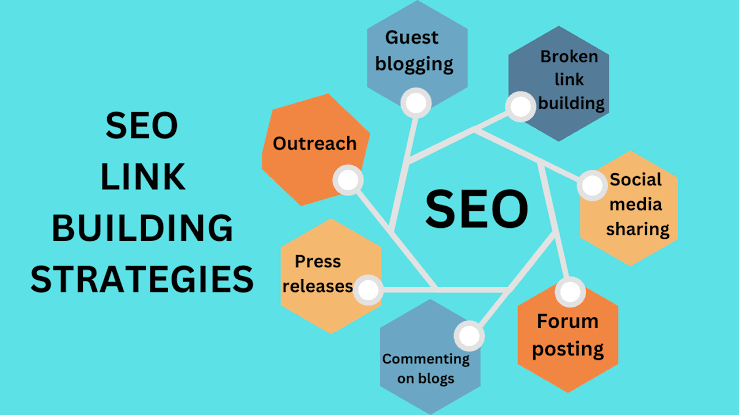
4 Real-World Strategies That Consistently Win Links
These are not novel. They work because most competitors execute them badly or not at all.
1. High-value guest posting
Not the “write 500 words for a DA 20 blog” model. Target publications your buyers actually read, and pitch topics only you could write.
A useful test: would you send this article to a prospect? If not, it is not worth the hours. Two strong placements a month outperform twenty thin ones, and you avoid the footprint that gets guest posts devalued.
2. Data-led assets and guides
Original data earns links because journalists and bloggers need something to cite. Survey your customers, analyse your own platform data, or run a small experiment and publish the numbers.
Even modest data works. A 300-response survey on industry pricing can generate more links than a 5,000-word opinion piece, because it gives writers a stat they cannot get elsewhere.
3. Unlinked brand mentions
Someone mentions your company without linking. That is a warm lead, not a loss.
Set up alerts for your brand name, check the mention, and send a short, friendly note asking for a link. Conversion rates here are far higher than cold outreach — often 20% to 40% — because the editor already decided you were worth mentioning. At linksbuilderhub.com we treat this as the cheapest link source most teams ignore entirely.
4. Manual competitor link reclamation
Pull the backlinks of pages ranking above you and look for patterns. Which sites link to several competitors but not to you? Those are proven linkers in your niche.
Then find the angle. Maybe they covered a topic you have a better resource for, or they cite outdated statistics you can replace. Pitches built on a specific gap convert better than “please link to us.”
What is Link Building Really Take to Move the Needle?
Nobody wants this answer, but it is the accurate one: three to six months before you see meaningful movement, and longer in competitive niches.
New links need to be crawled, indexed, and then evaluated in context. That alone takes weeks. Rankings then shift gradually as the algorithm recalculates relative authority across your niche.
Several factors change the speed:
- Site age and existing authority. A domain with some history absorbs new links faster than a brand-new one.
- Competitive density. Law, finance, and insurance move slowly because everyone is building links.
- Link quality and relevance. Five topically relevant editorial links can outperform two hundred low-quality ones.
- On-page readiness. Links cannot rescue a page that does not match search intent. Fix the page first.
- Internal linking. Authority needs paths to reach the pages you care about.
Track leading indicators while you wait — referring domains earned, outreach reply rates, branded search volume. Ranking position is a lagging metric and will discourage you for the first two months no matter how well the campaign is run.
A Grounded Way to Start
Link building is not a growth hack. It is a slow asset-building process that rewards consistency and punishes shortcuts, which is exactly why it still works.
Start with one page you know deserves to rank and one month of focused outreach. Ten personalised pitches a week, two data points worth citing, and a habit of checking unlinked mentions. That is enough to learn whether the channel works for your market before you spend real budget.
If you want a structured starting point, the outreach frameworks at linksbuilderhub.com cover the pitch templates and qualification criteria in more detail. But the first step is simpler: pick the page, find the people who should link to it, and send the email.